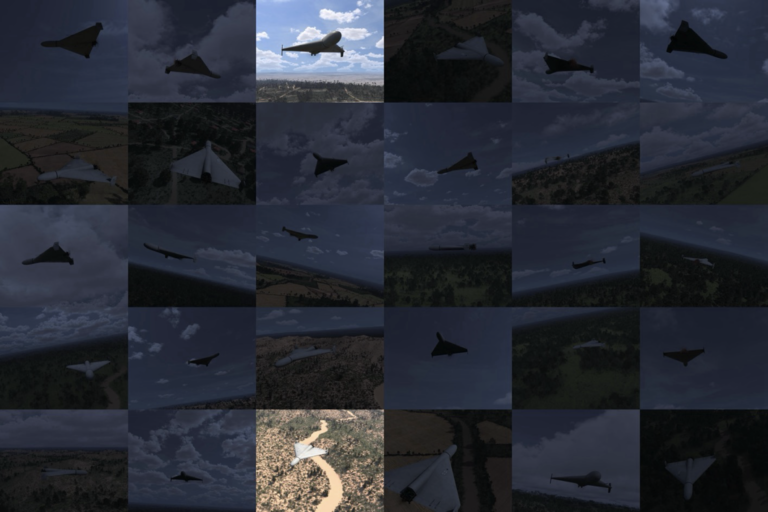
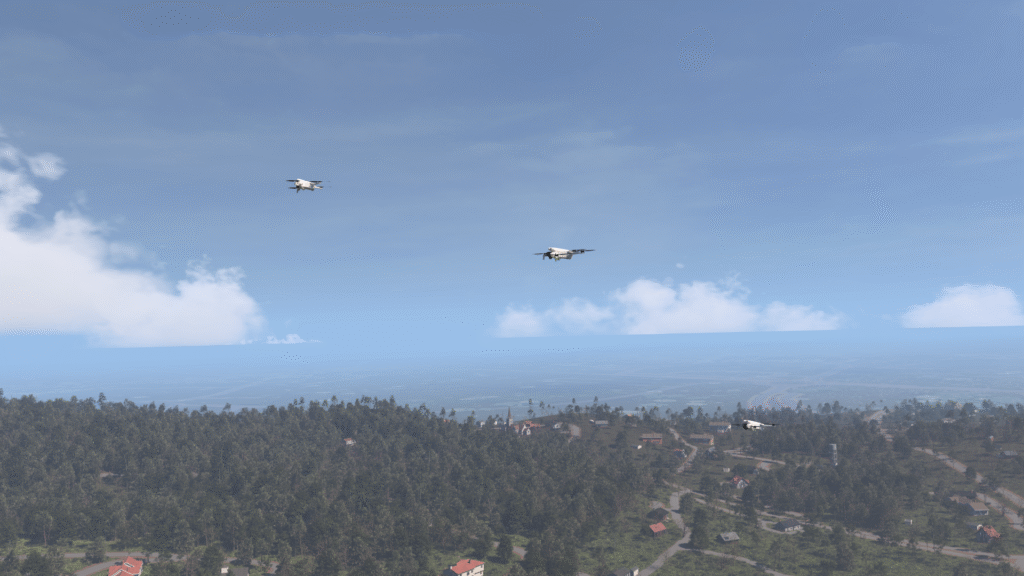
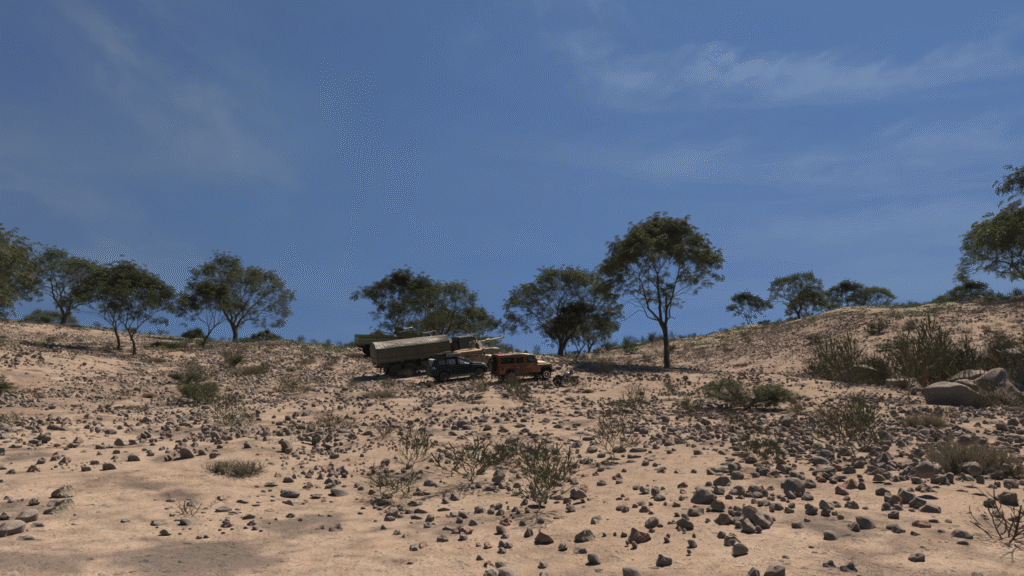
Synthetic training data is artificially generated imagery: built from 3D models, physics-based rendering engines, and procedural algorithms that replicate real-world visual conditions without requiring cameras, field teams, or labeling contractors.
Generate the images when you need them.
Gain complete control over configurations, including scenes, sensors, lighting, activities, labels, and more.
Eliminate privacy concerns by avoiding the use of real-world data.
AI Verse’s procedural engine eliminates computer vision data bottleneck.
Define your parameters: object classes, environments, lighting, sensor type, weather, viewpoint, etc., and the platform generates fully annotated images in 4 seconds on 1 GPU, at any scale, with pixel-perfect annotation.
PROCEDURAL SCENE GENERATION
Scene Layout: Stochastic Decomposition Trees
3D Standardized Assets Database
3D SCENE
IMAGE
RENDER
Complex Labelling
Materials Database
Light Sources
Virtual Camera Controls and Properties
With AI Verse’s procedural engine, training datasets that once took teams three months to build can now be completed in hours. And unlike real-world data, any scenario; adverse weather, rare object configurations, sensor failures, edge cases; can be generated on demand.
HELIOS
GAIA
Generate one fully labeled image in just 4s!
Generate all edge cases to improve your models’ accuracy!
Launch faster than ever before and gain a competitive edge!
There are 8 pixel-perfect labels included: Classes, Instances, Depth, Normals, 2D/3D Bounding Boxes, 2D/3D Keypoints, Skeletons, and Color.
Users select the desired parameters for the environment, scenes, objects, activities, lighting, and more. Based on these criteria, our engine can generate an unlimited number of diverse, varied, and labeled images ready for AI model training.
Yes, our automated system ensures that each generated image contains 8 pixel-perfect labels, reducing the risk of inaccuracies and guaranteeing the highest data quality.
Our proprietary procedural technology generates images based on human input. Users select various criteria for the image from a menu in a step-by-step process, rather than typing a prompt into a GenAI tool. This approach minimizes mistakes and ensures the highest possible realism in our images.
It takes 4s to generate one labelled image on 1 GPU. Generation can be spread across several GPUs (max 10).
The most common objection to synthetic training data is the domain gap: the performance drop that occurs when a model trained on synthetic imagery is deployed against real-world sensor data. For a long time, this objection was valid. Game-engine or GAN-generated images lacked the physical accuracy that defense and industrial CV applications demand.
AI Verse addresses the domain gap through physics-based rendering. Rather than approximating how light and objects appear, the AI Verse procedural engine simulates actual sensor physics: infrared thermal signatures, lens distortion profiles, motion blur at specific shutter speeds, atmospheric scattering across operational distance ranges, and surface material reflectance. The output imagery is not a stylized approximation of reality, but it is a physically accurate simulation of what a specific sensor would capture in a specific environment.
The second mechanism is procedural variation. Every generated dataset draws from a continuous space of randomized scene parameters: object positioning, lighting angle, weather condition, background clutter, and viewpoint. This prevents the overfitting that occurs when synthetic datasets use fixed templates. Models trained on AI Verse data generalize because they have been exposed to the full distribution of conditions they will encounter in deployment, not a curated sample of them.